Dive Brief:
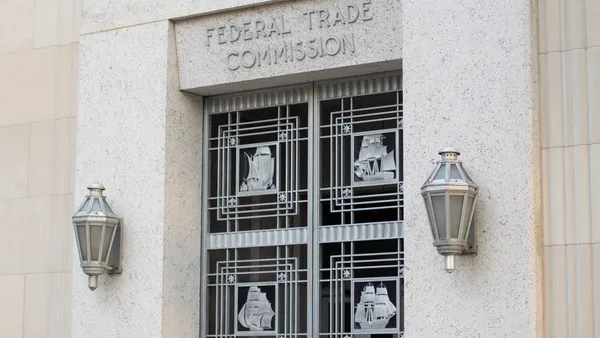
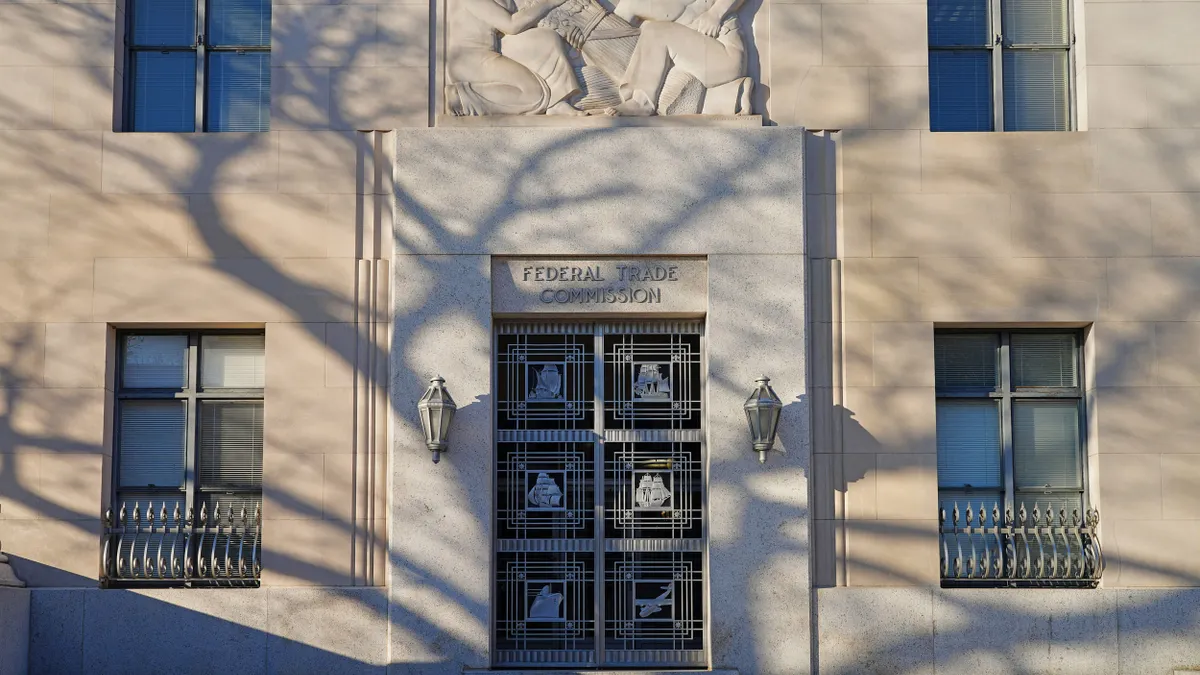
- The Federal Trade Commission is forming a new healthcare task force as regulators double down on combating anticompetitive behavior in the sector.
- On Friday, Commissioner Andrew Ferguson directed FTC staff to create a new group to lead healthcare enforcement, create agency-wide investigation strategies, better identify legal cases where regulators can get involved and find new areas to crack down in the sector.
- The FTC hopes to expand the task force’s membership to include staff from other agencies, including the HHS and the Department of Justice, according to a release.
Dive Insight:
The FTC said the creation of the task force aligns with an executive order signed by President Donald Trump early last year directing federal agencies to “support a more competitive, innovative, affordable, and higher quality healthcare system.”
Healthcare makes up almost 18% of the U.S. gross domestic product, but health insurance, medical care, prescription drugs and more are often out of reach for everyday Americans due to barriers to access and sky-high pricing.
Experts say years of rampant consolidation among hospitals, health insurers and physician offices is a major driver of the current affordability crisis. Mergers and acquisitions between healthcare companies result in higher prices without a commensurate increase in the quality of care, research suggests.
The spotlight on consolidation has intensified across the last two administrations — and, more recently, in Congress, as lawmakers hold a series of hearings about healthcare affordability. And now, the FTC is standing up a new task force to better coordinate healthcare enforcement and advocacy.
Ferguson directed the FTC’s Bureau of Competition, Bureau of Consumer Protection, Bureau of Economics, Office of Policy Planning, and Office of Technology to form the task force in a memo on Friday.
The group will be co-chaired by one representative each from the Bureaus of Competition and Consumer Protection. It will include at least three members from each of the FTC’s bureaus and one member each from the Office of Policy Planning, the Office of Technology and the Office of General Counsel, according to the chairman’s memo.
The task force will meet at least once a month, and report to Ferguson four times a year.
“In standing up this Healthcare Task Force, I intend to ensure that the FTC is doing everything possible to take a comprehensive, coordinated, and effective approach to addressing existing and emerging consumer-protection and competition issues across the healthcare industry,” Ferguson wrote in the memo.
Ferguson touted recent FTC actions in the sector, including its settlement with major pharmacy benefit manager Express Scripts in the agency’s lawsuit against the drug middlemen for inflating the price of insulin, and its successful challenge of Edwards Lifesciences’ proposed acquisition of medical device developer JenaValve Technology in January.
However, the FTC has a mixed track record in stopping potentially anticompetitive deals in healthcare. Historically, the agency has been successful in challenging traditional horizontal mergers but had a harder time arguing against the novel, cross-market and vertical deals that increasingly make up M&A activity.
That led the FTC during the Biden administration to create a stricter set of merger review guidelines that gave regulators an expanded tool set to go after deals that are traditionally more difficult to challenge, including insurer acquisitions of physician practices and private equity “roll-ups” of multiple companies.
The guidelines were kept in place by regulators under Trump, despite expectations that the incoming Republican administration would take a looser posture toward reviewing deals.
In 2024, the FTC also tried to expand disclosure requirements for companies looking to combine, which would have required them to share more information about the reason behind the transaction and any competitive overlaps. However, a district court invalidated the premerger notification rule earlier this year in a setback for regulators. The FTC has appealed the decision.