Dive Brief:
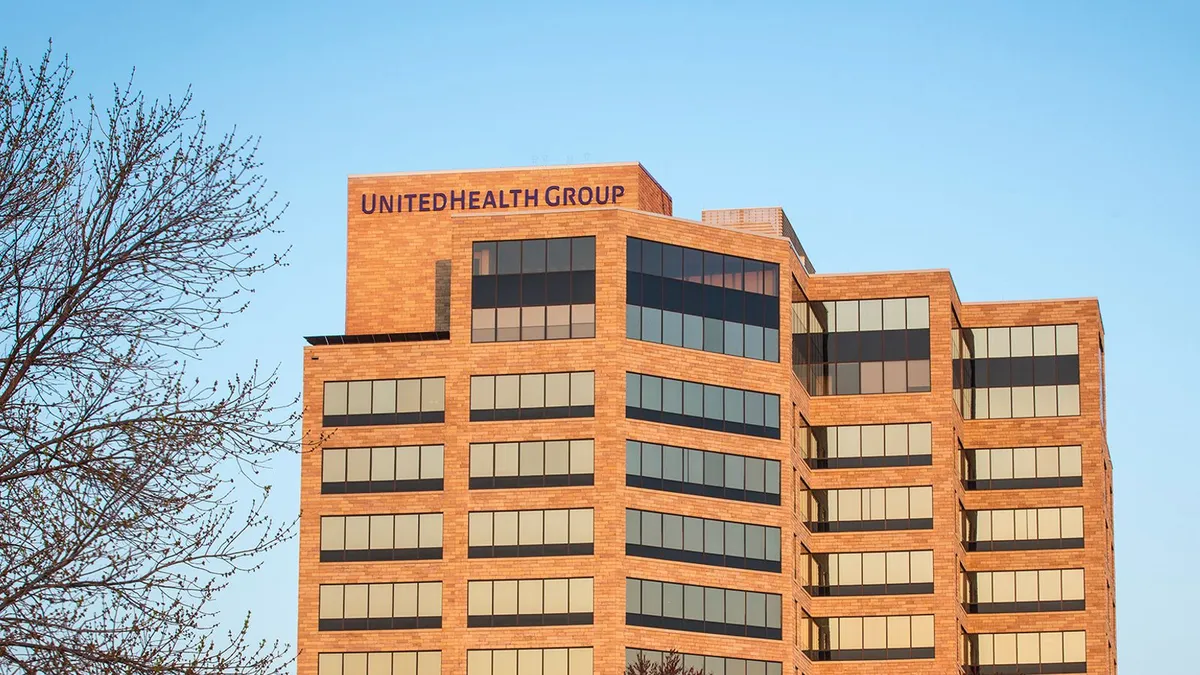
- A group of faith-based investors is suing UnitedHealth over the company’s refusal to disclose how its vertical integration strategy may be impacting U.S. patients.
- In December, the investors asked UnitedHealth to allow shareholders to vote during their annual meeting on whether the company should publish a report outlining the consequences of its acquisition spree over the past decade. However, UnitedHealth declined to include the proposal, and the Securities and Exchange Commission allowed the company’s decision to stand.
- The investors are asking a judge to force UnitedHealth to include the resolution in its proxy materials for the 2026 meeting of shareholders, according to the lawsuit filed on Friday.
Dive Insight:
Publicly traded companies’ annual meetings can include agenda items proposed by shareholders, if those shareholders submit matters for consideration in advance and the company decides they merit inclusion.
This particular group of shareholders has been trying to get UnitedHealth to agree to analyze the impact of some of its more controversial business decisions for more than a year. They’re led by the Quebec-based Congregation des Sœurs des Saints Noms de Jésus et de Marie, a member of the Interfaith Center on Corporate Responsibility, a coalition of more than 300 faith-based investors.
Early last year, following the killing of UnitedHealthcare CEO Brian Thompson, the group asked UnitedHealth to analyze the impact of healthcare delays and denials on the public. However, UnitedHealth successfully challenged the proposal, and it was not included in the company’s shareholder meeting in June.
The faith-based investors took another bite at the apple in December, filing another proposal asking the company to investigate how its acquisition strategy could be impacting U.S. patients and the healthcare system writ large.
Acquisitions have been central to UnitedHealth’s growth over the past decade, fueling the company’s evolution from an insurance company to a diversified healthcare behemoth operating the largest private payer in the U.S., a major pharmacy benefit manager and a sizable provider network with thousands of physicians. All told, UnitedHealth has some 2,700 subsidiaries, according to report published last year by the nonprofit Center for Health & Democracy. The company’s scale has sparked scrutiny from antitrust regulators and lawmakers.
UnitedHealth’s “vertical integration creates risks for the healthcare system, which are amplified by the company’s status as the nation’s largest health insurer,” the shareholders wrote in their proposal, which asked UnitedHealth to share data like patient outcomes before and after acquisitions, prior authorization trends and changes in provider network designs.
But in January, UnitedHealth advised the SEC that it planned on omitting the proposal from its proxy materials. The company argued that the proposal relates to ordinary business operations and doesn’t raise a significant policy issue that shareholders should weigh in on.
The shareholders disagreed, arguing the proposal is a significant policy issue and citing public concern surrounding UnitedHealth’s acquisitions.
Normally, the SEC would weigh in. But the agency stopped reviewing company requests to exclude shareholder proposals this year, due to overworked staff. Instead, the SEC told UnitedHealth it had no objection to the exclusion.
Now, the investors are suing, arguing they were irreparably injured as a result.
“UnitedHealth’s attempt to keep this proposal out of public view combines bad faith and bad behavior,” Meg Jones-Monteiro, the ICCR’s senior director for health equity and evaluation, said in a statement. “There are good reasons to be concerned that the acquisition strategies UnitedHealth has employed have led to less competition across the sector and a harsher and more expensive healthcare sector for patients and their families. Demanding transparency about these impacts is a reasonable and prudent request.”
A spokesperson for UnitedHealth declined to comment on the suit, instead directing Healthcare Dive to the company’s securities filing rejecting the shareholders’ request.
The spokesperson also directed Healthcare Dive to a white paper from CEO association Business Roundtable arguing that the proxy process needs to be reformed to protect companies from “activist investors” seeking to use it to “promote public policy agendas unrelated to company performance.”
UnitedHealth says it’s been trying to improve public transparency amid waning consumer trust and worsening investor sentiment. The healthcare juggernaut initiated an external audit of its business practices last year and published some results in December. CEO Stephen Hemsley also formed a new board committee to “monitor and oversee financial, regulatory and reputational risks.”